Thursday, 30 May 2013

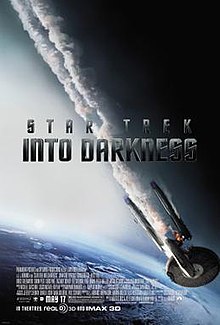
FILM: Star Trek: Into Darkness


The most notable thing about the Star Trek: Into Darkness trailer, apart from the presence of a good actor and that the entire film was unnecessary, was the brief fanservice scene. I think this is a reflection of the confidence (or lack thereof) the producers had in the film, to feel that the film was not good enough to sell on its own merits, and thus needed a fanservice scene to compensate. The fanservice in question is a mere two seconds long - the entire duration of which was included in the trailer - so it had no place in the trailer. In a way, the producers were not mistaken, because Into Darkness doesn’t have many other selling points.

Other than nostalgia, I don’t understand why Star Trek exists anymore. I never saw the original TV series, so I don’t know if they were good or not, but in any case, I seriously doubt that any more Star Trek needs to be made. The original series was adequate in exploring the concepts and characters the creators wanted to, and so this reboot adds nothing. Rebooting a franchise, as was done with Star Trek, serves no purpose other than retreading the original story, and the best thing for the franchise is to leave it alone and let it die gracefully, rather than beat the dead horse to a pulp. 

But as I said, I never saw the originals, so I might be wrong. I seriously doubt it though. I also have little memory of the 2009 Star Trek film, so I can’t be sure about the continuity in that regard. Into Darkness starts off with the USS Enterprise on an alien planet, which looks like it and its natives were designed by Dr Seuss, on some mission. It wasn’t exactly established what they were doing here, but in the end they break some rule about revealing themselves to the primitive species, and get the ship confiscated. It’s not a good start when you have no idea what the characters are meant to be doing. In any case, Spock nearly dies, and Kirk needs to uncover the ship to save him, so he does - however, that violates the aforementioned rule and everyone gets angry at each other.

It’s really difficult to empathise with the characters in this film because they are all so one-dimensional. I understand, though, that it’s hard to translate television characters to a film, (see Firefly and Serenity) because there’s not enough time in a film to explore so many characters to the same depth. But this is less an excuse for bad characterisation, and more a reason the film should not have been made in the first place. If you can’t translate the characters to film, perhaps it is a sign that the characters should not be translated to film.

The writers of Into Darkness make little effort to establish characters to the point where we can start to care about them. Characters need to become people who we care about, so when something happens to them, we can empathise and become involved in the events. This takes good characterisation, which Into Darkness lacks. I didn’t care when Spock nearly died at the start, and in the ensuing conflicts I could not invest in a side because there was nothing to invest in. Within ten minutes, a character was introduced - who was apparently in the first film, but I had no idea who he was - and soon after, he was killed, and for some reason I was supposed to care about this, too. Dramatic and melancholy music played, like a cue card which says “be sad now”, but I wasn’t. I’ve noticed a lot of films use dramatic and emotional music to tell us that we are supposed to care about something, but this doesn’t work as a substitute for characterisation.

Antagonists also need good characterisation, because that is what makes them feel real, and therefore threatening. This rendition of Khan has the same problem Iron Man 3’s villain had, which is a complete lack of character, and incredibly obscure and unbelievable motives. His aim is (allegedly) to unite his family of superior genetically enhanced humans to exterminate all inferior species, which comes across as just silly because there’s no real reason to do so. Before he was established as the villain, Khan was vulnerable and only wanted his family back. This is far more plausible and makes far more sense than when his true villainous motive is revealed - as a character, he’s half-decent, but the writers had to contrive a reason for him to be evil, so his transition feels unnatural and makes no sense. 

This brings me to the plot, which is a complete mess. As I said before, the antagonist’s motive makes no sense, so it’s difficult to take the overall plot seriously. Khan is a genetically superior superhuman who has hidden 72 of his kind in torpedoes, and fears for their safety. So he attacks a meeting of Starfleet commanders and then flees to the Klingon homeworld. The Enterprise is sent to kill Khan, but instead capture him in order to subject him to due process, but then they are intercepted by another Starfleet ship commanded by another Admiral, who proceeds to try to kill them. None of this is adequately explained, so it is nonsensical and difficult to believe. Meanwhile, Scotty finds something near Jupiter at the coordinates Khan gives, which is talked up to being significant, but such significance is never revealed, and the “thing” isn’t mentioned again. It’s not even explained what the thing is - indeed, the plot summary on Wikipedia doesn’t even mention it. The plot is incredibly convoluted, and unnecessarily so, thereby it becomes difficult to feel immersed or engaged in the story.

Maybe you need to be a Star Trek fan to get this film, because I never was, and consequently I don’t get this film. It’s assumed you are already familiar with the characters, so it doesn’t feel the need to characterise them before they die, and as a result I felt nothing when Kirk died at the end (not a spoiler, he gets revived anyway). Obviously, Star Trek fans will already have an investment in the characters, so Into Darkness will have a more profound effect on them as such. As part of a franchise, for the current Star Trek following, I suppose it works okay. But as I said before, I don’t see how a reboot is necessary, when all it does is retread what has already been done with the original films and series.

The writing is bad, the characters are poorly established, the plot is convoluted and silly, and the action scenes are boring. If you’re a Star Trek fan, perhaps you would see it differently, but Into Darkness was allegedly an attempt to appeal to a broader audience, and in that respect it fails. I feel Into Darkness will do little other than alienate non Trek fans, and appeal to nostalgia for old fans, and as such I don’t believe it needed to be made. Leonard Nimoy makes a contrived and unnecessary cameo appearance as “old Spock”, for the sole purpose of nostalgia, which was the turning point for me. It’s obvious Into Darkness is little more than a Star Trek cash-in. It does nothing to break new ground or explore new territory in the Star Trek universe, opting instead to make money from the nostalgia market, and Nimoy’s appearance only confirmed this for me.

I’ll say one good thing about the film, though, and that is Benedict Cumberbatch’s performance. He is a tremendously good actor, and his scenes were the best parts of the film. Even if his character was implausible, he manages to bring some kind of life to Khan, to the point where his performance was enough to give me hope for how the film would turn out in the end. Of course, I was proven wrong in the end.

Also, I would like to see a science-fiction series or film - just one - which explains some of the ridiculously bad engineering decisions made in-universe. Or scientifically justify the devices and objects as such. I had this gripe with Iron Man, and it’s equally applicable here. It seems like “form follows function” is a foreign concept to engineers and architects in the Star Trek universe, and indeed many designs seem arbitrary and make no sense. I would love to see a science fiction story where everything is scientifically theoretically plausible, and the producers actually do their research. Perhaps we need an adaptation of an Iain Banks or Greg Egan novel.

But I digress. I suppose my conclusion is that for Star Trek fans, Into Darkness might be good, but for everyone else it’s merely a sub-average science-fiction/action flick. And it is yet more evidence that - contrary to popular belief in Hollywood - a massive budget and expensive special effects cannot carry a film alone.

Thursday, 23 May 2013

MUSIC: Amok - Atoms For Peace


It seems like Thom Yorke has made it his goal as an artist and musician to be as left-field as possible. After the international super-hit that was OK Computer, Radiohead made Kid A - a complete diversion from the style of its predecessor, which I maintain is Radiohead’s best release to date. I have always respected Thom Yorke as an artist, but Radiohead has been getting stale and repetitive of recent years, so it’s heartening to see him move on to other projects. I haven’t even listened to The King Of Limbs, because In Rainbows was disappointingly repetitive and mediocre that I had lost faith in Radiohead by that point. His 2006 solo album, The Eraser, was the best thing Yorke had produced in years at the time, and I would argue it still is. Now, Yorke has formed a new supergroup, Atoms for Peace - with members from R.E.M., Red Hot Chilli Peppers, and Beck, among others - and released a new album, Amok.

Despite being released in February, I wanted to review Amok for a couple of reasons. The first is that I was interested in what Yorke has been up to of late, and after hearing a few tracks on this album I was intrigued. Secondly, I have a long list of films lined up to review over the next month or two, so it seemed like a good idea to mix this page up a bit for the time being with a music review.

You would be forgiven for thinking Amok is another Thom Yorke solo album, for two reasons: one, much of it is reminiscent of The Eraser, and two, most of the album is synthesised, so it’s difficult to hear where the rest of the band comes in. Amok is one of those weird, left-field art-rock albums which will probably be dismissed as pretentious art-wank garbage by some. This, to me, is a point that reeks of criticising an album for being too sophisticated, which seems to be missing the point a bit. I feel music should be encouraged to advance in complexity, and Amok certainly does that; the complex layering, polyrhythmic composition, subversion and dissonance are all quite impressively executed.

Among Amok‘s biggest strengths is atmosphere. The subtle use of dissonance, reverberation and ethereal keyboards creates a chilling atmosphere, only enhanced by Yorke’s angelic falsetto vocals and possibly the thinnest sounding drum synth I’ve ever heard. The album sounds incredibly thin overall, due to the aforementioned drums and a focus on high, sharp trebles, the result being some very tense and chilling music. Which I like - I like how the album aims for slightly dissonant sounds, because it makes it more engaging to listen to. Music which occasionally sounds mildly unpleasant engages the listener in a very compelling way, by prompting us to invest some emotional energy into the music, but keeping it subtle enough so it doesn’t sound fingernails-on-chalkboard horrible. That’s something that Amok pulls off really nicely. Some of the guitar notes are sharp and intense, some of the intervals clash a bit, but overall not too much, so it strikes a nice balance which makes the music interesting.

Amok also utilises an interesting technique of random percussive sounds thrown into the mix, at times giving the album a slightly chaotic feel. Not chaotic like Rage Against The Machine, but chaotic in the sense of unpredictable. It’s in time with the music enough that it doesn’t feel out of place, but it’s syncopated and random enough to be noticeable and commendable. It’s a very neat touch which adds a lot to the music. This particular percussive layer is incredibly quiet at times, so one needs to listen hard for it, but it’s there. And this brings me to another point - subtlety.

The dynamic shifts and changes in Amok are incredibly subtle. Each song undergoes small, subtle changes and gradual evolution until it emerges at the end slightly different. This technique of evolutionary songwriting I’ve been very fond of over the years, rather than the typical trend of relying on switching between structural segments (i.e. verse, chorus, repeat etc.). While many songs are not particularly exciting at first listen, it takes paying close attention to hear the nuances and subtle changes, and the payoff is worth it. Some of the more discreet layers can add a lot to a song when they are noticed. Amok is an exercise in brilliant and innovative songwriting, and refreshing to listen to after some of the heavier and less subtle music I’ve been listening to of late.

Having said that, the album does tend to drone a fair bit, which isn’t necessarily a bad thing, but unless you’re listening closely, it’s difficult to discern when one song finishes and the next begins. As a result, Amok does start to sound repetitive around halfway through. The songs themselves are not inherently repetitive, however they do sound similar to each other, and as you listen to Amok the whole way through, the individual songs blur together somewhat. But again, listen closely and you will notice the subtle differences which can change your experience of the songs. Additionally, on an unrelated note, at times the synthesisers sound like 1980s 8-bit video game music, which doesn’t do the music any favours. This particular sound really takes you out of the experience and damages the atmosphere, but it’s only heard prominently on two songs - Unless, and the title track - and is abandoned after a short while, so it’s a forgivable sin. 

Thom Yorke’s voice has been known to annoy me in the past at times. Sometimes his high-pitched wailing can get irritating; however, on Amok it fits the overall tone and atmosphere quite nicely. It suits the bleak and cold feeling conveyed in this album, and coupled with the reverberation and sustained notes creates a sense of aloneness inherent in the music. I like music which can profoundly convey a strong, consistent feeling, which is something Amok does really well. As I mentioned before, the individual songs can appear to merge with each other if one is not paying attention, but this contributes to the overarching droning sound, making Amok an experience to listen to from start to finish. I would list notable tracks in this regard, however that would involve naming every song on the album. It’s difficult to cite examples, because almost everything I’ve said in this review can be applied equally to all songs on the album, give or take. The atmosphere is absorbing and carries you the whole way through, and the skillful employment of dissonance in melodies and basslines enhances the immersion. It reminds me of Kid A while employing techniques from The Eraser, in a good way, while sounding much thinner overall.

Simply put, Amok is a very good album, and definitely worth acquiring. It’s a very quiet album, as well as relatively short at 45 minutes long, and it may take some getting used to, but it is worth it in the end. It can be distracting while driving, but otherwise I love it - it’s a great example of innovative and talented songwriting. Amok earns a high recommendation from me.

Thursday, 16 May 2013

FILM: Iron Man 3


It’s difficult to know what to say about a film like Iron Man 3. The latest Iron Man films have been fairly solid, but overall lacking in substance. While Iron Man was a good film with a solid plot, Iron Man 2, on the other hand, was very insubstantial, had a poorly devised plot and overall was a sub-average film (although I’ll concede remembering very little about either). Neither film is particularly special or groundbreaking in any way, and there’s not a whole lot to be said about either of them other than that they’re better than your average superhero flick. As I hypothesised previously, Iron Man 3 is more of the same, and there’s not a whole lot to say about it other than “another Iron Man”.

It’s not particularly deep, complex, or subtle in anyway, and Iron Man never has been. The original character had Cold War and military connotations, as did the 2008 film to some extent, but films two and three seem to be little more than cash-ins on Iron Man’s popularity. Iron Man 3 has a messy plot, an antagonist with no credibility, and runs on unbelievable “Hollywood science”. Nothing makes any sense or has any weight behind it, and I had neither an investment in any of the characters, nor a sense of the stakes - that is, I could not relate enough to the plot for any sense of urgency to make sense to me.

One of the most important things for a film where the premise is “protagonist vs antagonist” is to have both sides relatable in some way. An antagonist’s motive as simple as, say, the acquisition of money (for example), is relatable enough that the audience can believe he is a real person, and by extension that he is a genuine threat. This is a factor which helps build the audience’s investment in the events, allowing them to have power and meaning. In Iron Man 3, however, Killian’s reasons for his actions are not revealed or explored in any way, so he comes across as merely silly. Without a credible motive, a villain becomes little more than a human MacGuffin. Iron Man 3 is an insubstantial, superficial triple-A Hollywood film like most of them, relying on expensive CGI rather than good writing to carry it, and it is not helped by being a sequel to two other films just like it.

The Iron Man series has had one redeeming quality, though, and that is the characterisation. Or, more accurately, Robert Downey Jr. as Tony Stark and his perfect facial hair. The way in which Stark is written into this film is masterful, and Robert Downey Jr. is a fantastic actor who portrays the character incredibly well. And that might just be enough to carry the film. Tony Stark is an egocentric snarky genius, and is absolutely hilarious to watch in all three films. Granted, he might be the only reason to watch any of them, but it is enough of a reason to. I was not kidding about the facial hair either - Stark is stranded in the Deep South for at least a few days, and despite having no time or means to tidy his beard, it remains exactly perfect from start to finish. 

This brings me quite conveniently to another point: despite the silly plot and the unrealistic science, the film retains quality for the simple reason that it is played for laughs. In other words, it runs primarily on the Rule Of Funny. The Iron Man films are not generally classified as comedies, but they aren’t far off in this regard, as the only reason the films survive is because they are funny. The Avengers was a brilliant film, but only because Joss Whedon’s writing of the characters was funny - hence, the Rule Of Funny. Like in the Iron Man films, the plot was dumb, the villain was lame and the science made no sense. But the film was good because it was hilarious. The degree to which The Avengers relied on comedy to carry it is enough to label it a comedy film, and Iron Man 3 is the same. It’s not quite a comedy in the strictest sense, because it does feel like it wants to be taken seriously to some extent, but it relies primarily on humour to carry its quality, which it does well.

That’s about it. As I’m writing this, I can’t help but notice that anything I say about Iron Man 3 would be equally valid if I were talking about any other Iron Man film. The formula is pretty much the same, and it’s hard to talk about one without drawing uncanny parallels to both preceding films. This further supports my observation that Iron Man 3 is little more than just another Iron Man, and nothing more than an extension of the same story. It does quite conclusively draw a line under the series, though, with Tony Stark killing off Iron Man and pursuing a normal life. It’s good to unambiguously end a series, but I’m not sure it was necessary. Iron Man 1 had a solid, self-contained story, and didn’t need a sequel in the first place. There’s no reason to think that Iron Man 2 needed a sequel either. 

As a result, Iron Man 3 reeks of a studio playing it safe, so it can cash-in on a popular franchise. It doesn’t break much new ground, to keep box office revenue secure. Iron Man 3 does play around with some more complex themes, involving anxiety attacks and post-traumatic stress-disorder related to the events of The Avengers, and a breakdown of Stark’s resolve as such, but none of it holds any water because of the film’s light-hearted tone. There’s an inherent sense of inconsistency when the film tries to be serious and portray Tony Stark as vulnerable and fragile, then two minutes later he summons his colorful suit and sarcastic personality while flying around blowing things up.

Overall, though, I did enjoy it. As I said, the characters (especially Tony Stark) are well enough written to carry the film entirely, and it is genuinely funny. Primarily, it plays itself for laughs at the expense of many other things, but it does it so well it works nonetheless. Iron Man 3 is both missable and forgettable, but you can’t exactly go wrong with it - it’s still a good, fun, funny movie. But that’s all it is - so don’t go in looking for more, or you’ll only be disappointed.

Thursday, 9 May 2013

FILM: Warm Bodies


For a while now, I’ve had the intention of reviewing Iron Man 3, but upon reflection there can’t be a lot to say about it, other than “another Iron Man”. Instead, another film caught my eye - Warm Bodies, a film about zombies. 

I was definitely dubious when I first heard about Warm Bodies, what with the absurd level of marketing the film got, for a few reasons. For one, it’s a zombie film, and zombies are possibly the most unoriginal concept in the history of filmmaking. Secondly, the film’s premise: a zombie who becomes self aware and becomes romantically involved with a human. Zombies, being characteristically animated corpses and therefore brain-dead, cannot (or should not) possess coherent thought - this goes against the very definition of zombies. Not only does the premise sound silly, but it also sounds like Twilight: Zombie Edition.

But then I remembered that films like Zombieland and Shaun of the Dead got away with the zombie cliché because it was primarily played for laughs, and subsequently, both those films were very good. And the more I heard about Warm Bodies, the more it sounded like it, too, was playing the zombie premise for laughs. So for that reason, Warm Bodies attracted my attention far more than Iron Man 3 did.

It would have worked better, of course, if the film was actually funny. Or perhaps that’s a little unfair, coming from someone whose favourite comedy film is In Bruges, which encompasses an entirely different sense of humour. It may indeed be unfair to criticise a film for having a different sense of humour to my own, given humour is subjective - in any case, I found the film was least funny when it was trying to be. What I did find funny, however, was the implications of the concept itself, and the underlying sense of self-parody present throughout the film. Watching R stumble around and attempt to interact with people, combined with his internal commentary, is quite hilarious, primarily because it’s a silly idea. I get the sense that Warm Bodies is deliberately mocking itself for being inherently silly. However, at times it is difficult to tell whether the film is being deliberately ironic; occasionally, it seems to be taking itself seriously, and at other times it appears to be engaging in self-parody. It is therefore difficult to pinpoint the original intention the filmmakers had when producing Warm Bodies.

The film could be seen as a deconstruction of the zombie film genre. As I mentioned earlier, the characteristics of the zombies in Warm Bodies go against the inherent nature of zombies, but it does so for the sake of exploring zombies as an idea. It takes apart conventions and clichés present in many zombie films and explores their many natural implications; the obvious one being whether it is possible for zombies to become conscious or not.

Zombies in films are typically used as a villain it’s morally okay to kill, because they have no shred of humanity left in them - however, Warm Bodies decides to throw that out the window by giving zombies a human perspective, and turning zombies into creatures one can empathise with. Assuming the audience is familiar with the zombie film genre, the film asks the audience, “What is it like for the zombies?”, and I found myself contemplating this question in relation to other zombie films I’ve seen. Indeed, what do the zombies think and feel in I Am Legend, or 28 Days Later? It’s the sort of film which makes you question what humanity actually means, and whether such a definition actually should mean anything. In this respect, I found Warm Bodies unexpectedly compelling. R’s narration at the start of the film is the strongest part, giving the audience an insight as to what zombies are really like, and in this case R is nothing more than a normal human with reduced motor skills and an appetite for flesh. For combining insight with ironic humour, Warm Bodies earns my respect.

Warm Bodies also serves as a parody of teen dramas, as much of the interaction between R and Julie mirror the cliché exchanges one sees in many teen romantic drama films - but with one party replaced with a zombie. It is a fairly clever juxtaposition of teen romantic dramas and zombie horror, and given the two are almost incompatible, it becomes quite funny too. Even though, as I said before, much of the comedy isn’t particularly funny when it tries to be, it is far more entertaining when it becomes clear it is a parody of other genres. Essentially, it runs two generic and overused story arcs together for stylistic dissonance, to great effect. 

It is possible, however, that I’m reading far too into it, and the filmmakers had no idea what they were doing. But remember that a film is only as good as how you interpret it. The inherent subjectivity of the medium - that is, that one persons interpretation of the same film may be completely different to the next person’s, with neither more valid - is one of the reasons I like it so much. So while my interpretation might be completely inconsistent with the creators’ intentions, that doesn’t make my interpretation less valid by any standards. If Warm Bodies was just dumb fun to you, then that’s fine too. And it is dumb fun, to a certain extent, but if you consider the deeper implications of the film, there’s an underlying commentary on both zombie films and teen romance films which I think is both interesting and compelling, if nothing else.

Having said all that, Warm Bodies is fairly insubstantial, and short - just over an hour and a half long. Other than the ironic subtext, there’s not a lot else you can say about it - “zombie falls in love with human” sums it up quite well. If you opted to take it seriously, there’s no way you could say it’s good, because some of the writing is appalling. But I had fun with it, despite the unbelievably saccharine ending, and so might you.

Thursday, 2 May 2013

MUSIC: Watch It Burn - Shift


I’m almost certain that no one currently reading this have heard of Shift. That’s not to be unexpected either - Shift are an independent alternative metal band from Melbourne, Australia, who I first discovered some years ago on the Tripe J Unearthed website. I was quite surprised at the time to find that Shift are actually quite excellent. Back in 2010, Shift intended to write and release four six-track EPs over the course of around two years, each released for free download on their website. They kicked this project off with Faceless, an incredibly unique and chillingly atmospheric work. Listening to it again is giving me literal chills - needless to say, Faceless is absolutely awesome and anyone even remotely interested in metal music of any kind should download it here.

Watch It Burn is Shift’s second EP in the series, released in 2011, and currently their most recent release, their original schedule abandoned. Despite it being two years old, I wanted to review it anyway, because after Sempiternal I feel I should point out how metal should be done. Metal is a genre which is quickly becoming stale and obsolete, and needs to evolve and diversify fast if it doesn’t want to die out. At its core, it is a brutal alternative heavy metal EP; however, Shift’s diverse range of sounds, dynamic variability, innovative techniques, and unique approach to metal may just be exactly what the genre needs. In stark contrast to Sempiternal, Watch It Burn is a dynamic, evolving, unique, and sincere work, full of complexity and depth. The contemplative and thoughtful lyrics are welcome break from the self-centered and juvenile lyrics from Bring Me The Horizon. Nothing about Watch It Burn is stale, static, or monotonous in any way.

I mentioned subversion in my last two music reviews, and claimed neither album managed to utilise subversion to any meaningful extent. I am pleased to say that Watch It Burn showcases nicely exactly what I was talking about. Constantly, Shift will set up an expectation, sometimes subtly, and at the last minute turns it on its head, keeping the music interesting, engaging, and above all unique. For example, the title track initially sounds like it is trying to rip off every thrash band which has ever existed, before delving into a soft, ambient and atmospheric breakdown. It is this kind of change and diversity which make great metal bands. The opening track, Stand Against, alternates intervals every bar, and has an incredible, bluesy guitar solo during the mellow intermission; and The March is probably one of the most unique and unusual songs I’ve heard in a while. Overall, Watch It Burn is very subversive and experimental, ensuring it does not get boring.

Also commendable is Rob Lambert’s vocal talent. Lambert possesses a unique voice, which is what gives many bands their unique touch, and an ability to seamlessly transition from screamed/guttural vocals to melodic singing. An outstanding performance - especially notable in track two of this EP, Into The Whites Of Your Eyes, during the intermission, you can hear the power, tension and emotion in his voice. Oli Sykes could never match this level. Moreover, he has incorporated an innovative technique which, when I used to listen to Opeth, I wished Mikael Akerfeldt would do, and that is recording a guttural layer and a singing layer on top of each other. I always thought it was a neat idea, and Shift pull it off really well.

One thing I’ve noticed with all music (and I’ll use Metallica as an example because it’s the most prominent example) is that often a band will use a particular production sound on a drum kit for all songs on an album - then the next album use a different sound entirely. Ride The Lightning used a soft-rock snare drum and a smooth, yet relatively hard bass drum - two albums later, we hear an ultra-slick bass drum and a harsh, coarse snare. Every song uses the same sound, yet every album is slightly different. This is well and good, and creates a consistent tone within the album; however, sometimes a little variation in tone is necessary. Even something as small as turning the snare off for a few songs can make a huge difference in creating variety within an album. Shift appears to be aware of this, and mixes up the production on the drums on a few songs on Watch It Burn, to great effect. The March, for example, appears to be taking cues from industrial music, with the harsh distorted drums creating a certain tonal dissonance and tension within the sound, which is masterfully executed.

It may be a little difficult to classify Shift into a subgenre of metal. Some may say “progessive”, however I have abandoned using “progressive” to label music for a number of reasons. For one, it’s far too easy for bands to record three entirely separate songs back-to-back and call themselves “progressive”; and secondly, “prog” bands will inevitably rip off each other to the point where it becomes its own generic style of music, undermining the premise of progressive music. To an extent, this has already happened, and “prog” fans will try to apply a specific formula and sound to progressive music, forgetting that the point of progressive music is to defy such rules. In any case, I choose to regard the label “progressive” not as a genre, but more as an approach to songwriting - a method, if you will.

Progressive music typically utilises absurd rhythms, time signatures and layers, long and dynamic songs and unusual structures. What makes progressive music so pretentious is that most bands use the aforesaid techniques purely for their own sake - innovation for the sake of innovation, and thus it adds nothing to the music. Less songwriting, more a band showing off. On the other hand, Tool - a great band often associated with progressive music - often incorporate such strange songwriting techniques, but it’s always done for the sake of the music. They use it primarily to convey a tone, or a feeling, or to enhance the sound overall, often to the point where the unusual polyrhythms and alternating time signatures sound natural and barely noticeable because the music is so immersive. By contrast, other so-called “prog” bands tend to lean towards showing off how clever they are, rather than writing good music.

I bring this up, because Shift do come dangerously close to this on Watch It Burn. While Faceless was incredibly tight from start to finish, and ending on possibly their tightest song, Watch It Burn does start to feel a bit messy toward the end. On The Brink, particularly the first half, is a good example - the crazy complex polyrhythms sound pretty cool and new, but they don’t add anything to the song, and for the most part sound like the band showing off. The last track, Water On The Sun, has allegedly taken years to write, and it definitely shows - it’s all over the place. It’s completely unfocussed, centered around the most generic 7/8 rhythm in history (although it’s still in 7/8, so “generic” isn’t really fair), and the texture is a mess. There’s little sense of pacing or atmosphere at all, and for these reasons I make the connection to the aforementioned pretentious “prog” attitude many possess. Like On The Brink, the progressive tendencies in Water On The Sun don’t really bring anything new to the table, and aren’t really necessary. This doesn’t make it a bad song at all - in fact, it’s still quite interesting and unique. But it’s not especially great or groundbreaking.

The main issue with this release it that it fails to outshine its predecessor. With Faceless, the cold atmospheric focus worked really well for Shift, and it seems like with Watch It Burn they’re trying for a more epic, stadium rock/metal sound, and I personally don’t think it works quite as well. It’s still excellent, there’s no doubt about that, but it’s second best to Faceless. No songs are quite as good as The Bin, and overall it doesn’t have the same focus that Faceless had.

Shift are currently working on a full-length album (so I hear), and I expect it will be good, and I eagerly await its completion. In the meantime, their music is available for free download or purchase on their website, and I strongly recommend acquiring both their EPs. Faceless is amazing, and while Watch It Burn is less good, it’s still good in a different way. Shift are a remarkable new band in the heavy music scene and a welcome addition to the current pool of modern music, and I will continue to follow their career for years to come.