Thursday, 12 December 2013

MUSIC: Dream Theater - Dream Theater


If you’ve ever been involved in what is currently termed “progressive” music, and specifically progressive metal, you have almost undoubtedly heard of Dream Theater. Often hailed as one of the greatest progressive bands of all time, Dream Theater are known (by me) for their unique sound and complex songwriting structures, as well as all being brilliant individual musicians in their own rights. They emerged out of the glam rock and classic heavy metal scenes of the 1980s, and to me they seem to be more of a glam-metal revival band, but with their dark and complex musical style they have managed to breathe life into a genre which has been lifeless and superficial for decades.

I felt compelled to review Dream Theater’s new self-titled album after listening to my music on random and finding a few old Dream Theater songs come up, as I felt a bit of nostalgia for a band I was once a fan of. I’d forgotten how good they actually are - yes, their lyrics are terrible, their songs are hit-and-miss, they illustrate perfectly the reasons for my distaste for guitar solos - but their overall sound is so unique that you have to give them credit. As a straight metal band they are miles ahead of most, with both a heavy powerful sound combined with unpredictable and subversive songwriting techniques making them one of the most interesting bands to listen to today. As well as this, each member is a fantastic individual musician in his own right and each has their own unique sound the bring to the table. What made Dream Theater really great, in my eyes, is a very powerful and resonance in the music, due in part to a combination of James LaBrie’s incredible singing voice and Mike Portnoy’s drumming prowess. They are a band I thoroughly enjoy listening to, and have a lot of fun in doing so. 

The most striking feature of this new self-titled album is how clean it sounds. Everything is produced such that it is polished to a mirror-shine, particularly the drums. One noticeable feature of Mike Portnoy’s work on their previous albums is his unique drum sound, which was crisp, sharp and strong. It contributed to the overall Dream Theater character, and is conspicuously absent from this release. I haven’t kept up to date with the band for the past few years, so I’m not sure if this change in tone happened before or after Mike Mangini’s induction, but to me it seems the band is poorer for Portnoy’s departure. The drums sound clean, flat, smooth, and thus devoid of character, particularly the snare, and prominently more subdued because of it - the snare sounds very artificial as well as soft, like traditional 80s heavy metal would sound, and I don’t like it at all. It’s far less affecting than it could be.

In fact, a big part of this album is the inorganic over-production of the sound, something which I believe filters out the humanity and the spirit from the music, making it sound mechanical and meaningless. This is something I have commented on before, and here is yet another example of it - and because of this feature, the whole album feels restrained and reserved. It sounds as though the band is not putting the same passion and power into their music as they once did; as though they’re holding back to make it more palatable. Jon Petrucci’s guitar - particularly during choruses - is (paradoxically) remarkably unremarkable, as well as generic and uninteresting. The ridiculous level of polish applied to this album blends everything together into a bland mush of mediocrity, and the guitarwork is no exception. It’s disappointing because it subtracts the “heavy” from “heavy metal”, as there is no weight to the guitar distortion, and as a result it sounds superficial. Petrucci’s guitar tone once had a crisp, sharp sound which matched Portnoy’s - both of which combined to give the band a unique character - and for the most part is nowhere to be heard. Even James LaBrie’s vocals appear restrained, held back, and moderated - this is a man who has a tremendously powerful singing voice, and is a demonstrably incredible singer, holding back his voice, and the music suffers for it. Many times in Dream Theater’s back-catalogue I have noticed LaBrie carrying much of the power and drive in their music, but here he sounds far too tame. As for Jordan Rudess’s keyboards, I can’t say I’ve ever been a fan of his contribution to the band, so perhaps no further comment is necessary on this front.

Much of the songwriting decisions are equally questionable to the production choice. I’ve mentioned before my distain for overly clean melodies and progressions, where the resulting music feels too friendly and unchallenging with no real tension or dissonance involved, and it appears I have to mention it yet again here. This phenomenon is particularly prominent in the atrocious choruses to be found in this album, and the best examples would have to be from The Looking Glass and Surrender To Reason, among others. The relentlessly saccharine and superficially happy tone coming from the choruses makes me cringe. It could possibly be attributable to the songs’ chord progressions being based on the major scale, the pentatonic scale, or the major pentatonic scale - although I may be wrong about that, but the effect is the same in any case. Regardless, the lead melodies are certainly based on the pentatonic scale, and the result is music which fails to engage the listener. I can feel it trying hard to please me, what with the complex rhythms and structures, but its efforts bounce off my ears warranting hardly a blink. There are many guitar progressions which are so random and meaningless that they might as well be so much white noise, one example being most of Enigma Machine. There’s no weight to what the instruments are saying, no anchor to anything tangible; they just float off doing their own thing, much like a helium balloon just out of reach, and it happens to be outdoors. There’s no clear sense of direction on this album.

I can’t leave this subject without mentioning guitar solos. One of the great guitar artists in all of music history is incidentally one from whom the metal scene could - and should - learn a lot from, and never seem to, and this is David Gilmour of Pink Floyd. As a guitar soloist, he knew exactly where each note needed to be for the song to work; he would put so much weight and depth into a single note that he needn’t use many of them, the result being some truly astounding, eerie and atmospheric masterpieces. This made him a far, far greater guitarist than the shredders of the heavy metal scene like Kirk Hammett or, indeed, Jon Petrucci. It’s evidently a quality/quantity issue, and while Petrucci has made some commendable solos on songs such as Misunderstood and As I Am (to name a few), I can’t hear a single instance on this album.

Dream Theater also has a strong string orchestra focus, making much of it sound like a mediocre film score. None of the progressions seem to go anywhere - again, the orchestra flails around without any clear sense of direction. There’s a long orchestral interlude in the middle of Illumination Theory, which is about as derivative as one could get. For the style employed, it’s very generic and uninteresting to listen to, and not very compelling - the strings don’t enhance the rest of the music; they’re just there for their own sake. In fact, at times the music sounds more like Evanescence than Dream Theater, because of the combination of distorted guitar and string quartet.

The album does have its moments, however. The Enemy Within has a strong main guitar riff, incorporating fifth chords on repetition, creating a nice variety whilst remaining consistent, although the song is subsequently ruined by the chorus. Illumination Theory has just as many decent ideas as it does have boring ideas, including a great bassline at one point (followed by an utterly insipid and overlong guitar solo). But it’s not enough - most of this album is boring drivel with no weight or impact to it at all. For “progressive” music it is curiously radio-friendly. I personally don’t believe “progressive” is a genre of music, regardless of whether it is metal or rock or folk - it’s an idea, a concept, or a philosophy of music writing, where one strives to push the boundaries and experiment with new ideas. Dream Theater shows few signs of this on their new record, rather, they are simply reiterating what they’ve already done. There’s nothing on this album that the band has not done before, and done better - and regardless, I’d hesitate to call it progressive, anyway.

Possibly the greatest pitfall of progressive music (or one of them at least) can be tested with a simple question: ask yourself if this section of the song could at least as easily be its own song. Progressive bands have a tendency to pretend they are clever by stitching several different, unrelated musical ideas together to create one song - the problem of this, of course, is that they might as well be individual songs, so what’s the point of calling them one song? I believe it is dishonest to do so. If you are going to write long songs, each section should build on what’s come before, or be a variation on the song so far, and certainly not be completely different. I’ve said it before, but Tool is a perfect example of this, and Dream Theater themselves have managed to do this from time to time. On this album, however, they don’t do it enough to warrant commendation.

All of this illustrates that Dream Theater has been filtered to the point that it is no longer recognizable as a Dream Theater album; much of this could easily be mistaken for any other “progressive metal” band. Dream Theater is a fun band I listen to on occasion, but this album is not very fun because there’s very little substance to it. They are a far from perfect band, and while I wouldn’t even call this album “bad”, it is mediocre and forgettable.

Thursday, 5 December 2013

FILM: The Hunger Games: Catching Fire


I’ve been waiting for this one for a while; while the first Hunger Games film was revered by many, I still think it was an overhyped, overproduced garbage teen romance-drama film masquerading as a thriller - incidentally, with set and costume design apparently by Dr. Seuss, such extravagance successfully representing a culture obsessed with superficiality. It was a film which started with a very unique and intriguing premise, wherein a totalitarian state frightens its populace into submission by annually forcing their teenagers into a televised fight to the death. Sounds promising, but after ten minutes they pushed this to the sideline in order to focus primarily on the sappy, insipid romantic drama elements. I have been told that there is only so much one can do with such source material, but as I have said many times before, this is no excuse. The source text is not Holy Gospel, and should never be immune to alterations, or even - and especially - improvements, when adapting to another medium. Anyway, I’ve been looking forward to this film, as I didn’t have the opportunity to decry the first film when it was released, so I wanted to take the opportunity to do so here.

The first film had all the depth of a plate, essentially being Twilight: Orwellian Dystopia Edition. - and it should be interesting to note how many of these Twilight clones we have been granted of late. It was a predictable film where the characters were not characters, but unsophisticated caricatures, specifically of benevolence, selflessness and idealism (or in the case of the villains, malevolence, cynicism, and opportunism). The worst part was that the interesting, political premise was downplayed, because apparently we want to see the two leads confess their love to each other for the fifteenth time, as though we had not had enough of this in recent pop culture. 

By contrast, Catching Fire surprisingly manages to flesh out the interesting aspects of the first film. The worst parts of the first film are still here; however, Catching Fire has a far greater emphasis on political intrigue and backroom politics, martial law, and the dystopian concepts alluded to in its predecessor. After approximately ten minutes of uneventful and inconsequential proceedings in the beginning, a truly powerful and confronting scene follows in which a man is executed without mercy or humanity for merely raising his hand in a gesture of solidarity with Katniss. The power in this scene is not merely because a man dies - rather, it is because of the cruelty, the lack of humanity and dignity, and how it invokes feelings of powerlessness and helplessness. There is no appeal to mercy or sympathy for these people, and we are trapped in a cycle of cause and effect we are powerless to stop. This incredible scene really sets the tone for the rest of the film, illustrating how brutal and unforgiving this regime can be. Additionally, much of the first half of the film centers around the bureaucracy and inner sanctum of the nation’s political structure, and the relationship between fear and power, especially the sensationalist television and media culture upon which the entire setup rests. 

As well as greater political intrigue, Catching Fire has a vastly improved array of characters. While Katniss is still as dull as ever, possessing benevolence as her sole character trait, and the reprised male leads seemingly being able only to fall in love with Katniss, the rest of the characters are surprisingly colourful, dynamic, and complex. One key to complex character development is creating human beings who have more to them than they appear - and Katniss certainly doesn’t fit this bill. On the other hand, people such as Finnick, Beetee and Johanna are scripted such that I want to learn more about who they are. That kind of intrigue is invaluable when creating a believable story with believable people in it. Much of the second half of the film is focussed on the interplay between the various characters, which is fascinating and well written for the most part. 

I feel I’ve been too kind to Catching Fire as I write this, because as a film it still leaves a lot to be desired. While some of the characters are well written and well defined, most of them are plagued with stifled, unnatural acting. The two main protagonists are guilty of this, particularly in the first half - however, the two main villains are the worst offenders. The President and the Gamemaker are atrociously written as characters, particularly the latter, and they act like cliché villains. They are not convincing at all, sounding as though they are trying too hard to sound evil, rather than being genuine. As for their discussions together, they contain simplistic ideas about power and authority with nothing realistic, compelling, or subtle - indeed, at one point one of them talks about “shutting down the Black Markets”, forgetting that if one could shut them down so easily, they wouldn’t be “Black Markets”.

The generic romantic aspects are still very present, however they are downplayed this time for the sake of the more interesting parts. Every love scene is still cringeworthy, though, because unless you are a fifteen year old girl, chances are you don’t care about how much Person A “loves” Person B, and yet the film seems to take itself way too seriously on this front. It’s fine to use romance as a catalyst for more interesting things (as but one example, kill one off to induce grief in the other), but it should never be a central focus. In Catching Fire, the focus seems to switch intermittently between the romance and something else; and when we do have a romantic love scene, absolutely everything is dropped to dedicate itself to this. The music turns into an uplifting, emotional orchestral backing, there are long takes of lovers staring into each others eyes, and this can go on for several minutes. It’s not a good sign when a film puts all its effort into something as inconsequential as romance.

The thing about The Hunger Games that I’ve noticed is that it lacks perspective. There is a great idea here, about proletariats under large scale dystopian military rule, and how the oligarchical leaders use fear and distraction to gain power. Given more weight, this could be a remarkably compelling work of fiction - and yet it can only seem to focus on the petty emotional problems of a few teenagers. There’s little sense of the bigger picture being given any consideration, which makes the story seem both dishonest and insincere. As an audience, we know that there is much more to this world than the personal feelings of the teen characters; however, the first film swept all that to one side so it could focus near entirely on their emotional problems. Indeed, much of the beginning of Catching Fire centers around Katniss and Peeta (I’ve never understood why science-fiction writers feel the need to misspell familiar names to make them sound “futuristic”) trying to sell their romantic involvement to the population, while simultaneously struggling with angst because “they don’t really love each other”. That’s about as far removed from the big picture as one can get - it’s petty, it’s uninteresting, and it’s shallow. Thankfully, this is shaken up very effectively when the old man is executed, which puts everything into perspective for the two protagonists.

What is interesting about The Hunger Games, and particularly this sequel, is that it’s almost a deconstruction of our pop culture in general, particularly regarding films. The way we love to watch violence, spectacle, and superficiality is mirrored in this story, and how it works as an effective distraction from real world issues. There are people in the world who do live in poverty, struggling to get by with no help, and some societies are under martial law similar to that seen in these films. We in the first world, on the other hand, fill our heads with television and pop-culture obsessions to such an absurd degree that we have little room to genuinely care about these things, let alone do anything to amend them. The Hunger Games shows us how much we love violence and spectacle on TV by itself being about violence and spectacle - and the on-screen audience mirrors ourselves. With actual on-screen discussion about these ideas in the sequel which was absent from the first, The Hunger Games comes across as having developed a certain level of self awareness, and an understanding of what it's trying to be.

So while the worst of The Hunger Games is still around in Catching Fire, it has been subsequently diminished to make room for some more interesting ideas. I went into the first film expecting great things and was consequently disappointed, but this time the reverse is true. I enjoyed this film for bringing to the surface some of the subdued elements of the first film, and even the survivalist scenes are well directed, gripping and tense. Unfortunately, the series suffers from being based on teen/young adult fantasy novels, and so only a certain amount of depth is achievable, but despite this the producers seem to be doing the best they can, and for that I applaud them.

Thursday, 28 November 2013

TV: Doctor Who 50th Anniversary Special


Here’s an interesting drinking game idea: take a drink for every self-referential joke in the Doctor Who 50th Anniversary Special. Bonus points are earned if it includes leaning on the fourth wall. 

It’s difficult to know where to start with something like The Day Of The Doctor. As per usual in Doctor Who of late, the plot is an incomprehensible mess, and it is clear the writers and producers couldn’t care less about the result. The sole purpose of this special episode is to provide an excuse to put David Tennant and Matt Smith together in the same episode, not to further the story or to expand the concepts, but to solicit cheap laughs from the near-religiously dedicated fanbase. And yes, it is entertaining to watch on some level, but only through gritted teeth; laughter reluctantly emitted through a painful cringe. At this point, Doctor Who is straying dangerously close to self-parody, and the humour comes from laughing at the inherent absurdities within the show. Watching David Tennant and Matt Smith shadow each other side-by-side is funny because it illustrates the uncanny similarities between both incarnations, and thus the evident lack of imagination regarding the portrayal of the character - something the “Whovians” (a despicable word) probably won’t easily grasp.

If you were expecting something interesting in the form of The Day Of The Doctor, then I’m afraid you may have to go home empty handed. The episode is almost entirely constructed of fanbait, and is only interesting to the inner cult of Doctor Who fandom. The plot in question is clearly a slapdash effort, little more than a token framing device as an excuse for the three Doctors to get together. It is evidently so because the plot is hardly elaborated on, and is almost forgotten underneath the chemistry between the Doctors. It’s something about some alien race trying to take over the world again, doing so over the course of five hundred years so as to inherit superior technology, while the alternate, past doctor (played by John Hurt) agonizes over whether to end the Time War via double genocide. This episode opts to shed light on events before the 2005 revival of the series, exposing the events of the Time War so often talked about - the past Doctor is transported to the company of the future doctors (David Tennant and Matt Smith, predictably) by an entity resembling Rose, (whose presence is also only justifiable as a means to excite the hivemind of Doctor Who fans rather than to enrich the story) to help him make up his mind. What’s curious about this episode is that the story literally ends exactly where it started: the three Doctors decide not to commit genocide, but choose an alternative with a near identical consequence, while proceeding to forget the events of the episode and continuing to believe they had still killed them all - so it’s an unnecessary episode, because nothing new is added. Weaker still, no one thought to point out that despite killing both Daleks and Time Lords, the former race manages to keep coming back, so the genocide is a failure anyway.

Doctor Who increasingly feels like it is merely pandering to what the fans want, rather than actually trying to write a compelling story, and it shows by being fraught with inconsistencies, poor judgement, and revisionist history, the latter of which demands great care when dealing with old franchises. Despite all this, it remains ridiculously popular, presumably in part because it appeals to nostalgia. When an old franchise is rebooted, the creators will almost always be fans of the original, and thus the reboot will inevitably be nothing more than fan-fiction. I think it is apparent that Doctor Who has strayed down this road far too often of late, and the story is just going nowhere.

I was once a Doctor Who fan several years ago, but since then I can’t say I’ve been much of a fan of the series. But as someone who appreciates the concept and the idea, I can enjoy it from time to time, albeit with a grain or two of salt, and I can see several conspicuous flaws which ruin the potential for the show to be something spectacular. The most obvious one is simple: the appeal of he show is based near entirely on watching a young, handsome British white man dance around acting like an eccentric, peculiar genius on screen. I wager this is the main reason many of the fans continue to watch this show; and while it is certainly entertaining on some level, there is only so far you can take it before it begins to run stale.

There is another, large pitfall which the show’s producers have fallen into, and that is this: Doctor Who has far too many fantasy and action elements. The sonic screwdriver has become an all-purpose magic wand, the various time travel elements make no sense, and the writers seem to think they can slip by us some completely nonsensical technical jargon to make it sound “science-fiction” and hope we won’t notice. All this causes Doctor Who to fall well outside the realm of plausibility, and plausibility is one thing which keeps stories compelling. Referencing concepts outside the sphere of modern knowledge is fair game, but to outright defy conventional science is just irresponsible and lazy - here I speak of the scene in the prison cell, for which I cannot find a direct quote.

As for the time travel elements, I no longer believe time travel is an excuse for outright self-contradiction in a narrative. Part of the point of time travel in fiction is paradox, and I understand that, but Doctor Who has fallen to a new level wherein they no longer try to make it seem convincing. I would like to get one thing straight: is the Doctor one person, or several people at different times? Canon would have you believe the former, but this episode (and all the previous “multiple doctor” episodes) tend to suggest the latter. And in this episode, the self-contradictory parts are “resolved” via amnesia, which is about as lazy as you can get. 

Some enjoyment can certainly be gained from this episode if one does not endeavor to take the story too seriously, however I don’t see this as a point in its favour. If something is good, it is good in its own right, and if Doctor Who fails to meet the mark under even the slightest scrutiny then I can’t say it is anywhere near decent. And yes, I will concede that I did find The Day Of The Doctor entertaining, and I had a good laugh. But I take it upon myself to say what others don’t necessarily want to hear, which is that Doctor Who is a messy, incompetent, poorly written “science-fiction” show which does nothing other than pander to a hive-mind fan cult who have no desire for anything interesting or challenging in their lives - and the inclusion of Tom Baker at the end is really the culmination of all this, as it has no purpose to the story.

The concept of Doctor Who is a great idea, and it has had its moments in the past, but it has only been squandered by poor writer after poor writer. I’d like to see something challenging and different in Doctor Who, something more subversive and complex, because I think it could be done really well if executed properly. I know Steven Moffat is better than this because he made Sherlock, but his current efforts with Doctor Who have been poor at best. While I hope next year might breathe some life into this franchise, I still expect nothing to change.

Thursday, 10 October 2013

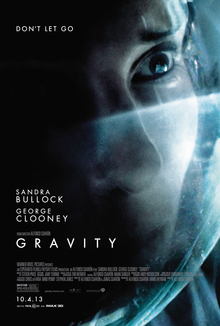
FILM: Gravity


Space is big. Space is cold. Space is empty. Space is lonely.

Yet far too many science fiction films attempt to fill space with many colourful and interesting creatures, places, and phenomena. This is fine, but it misses the true nature of space. Gravity is the first film I have seen which truly conveys how insanely vast, and empty space really is.

It is refreshing to see some original intellectual property in 2013, a year which has been plagued with sequels and remakes. I went into Gravity knowing nothing about it, other than its name and that it is an original story, and that is often enough for me to see a film. As someone who dislikes 3D, I can sincerely say that Gravity is probably the first film where the 3D effect added something to the experience. In 3D, the Earth sits behind the screen, which makes it appear as massive as it should. This is a film that understands scope and scale, and illustrates it well, something science fiction has hitherto struggled with. Unlike the majority of the sci-fi films released this year, the visuals in Gravity serve the story, and not the other way round. On top of this, watching Gravity in 3D fake depth does make the events feel more tangible and real than it would in 2D, which is important because the major selling point of Gravity relies on the audience begin able to connect with the events on screen.

That is tension. Gravity is an immensely intense experience. Not only does it present us with a vast abyss, but it throws us into it with the on-screen characters. I lost count of how many times my heart stopped because someone lost grip on the outer hull of a spacecraft, with the ever looming threat of being cast into the void, inertia carrying you infinitely into nothingness until you die. This would not be as powerful if the film did not draw the audience in as effectively as it does. 3D is but one technique which accomplishes this. The first twenty-or-so minutes of Gravity is one continuous take, rotating about all axes to make it clear that direction is irrelevant in space where there is no gravity, illustrating how disorienting space is. It makes us feel almost as though we are actually there, and the way the camera moves into Stone’s helmet to give us a first person perspective, and back out again, in the one take is nothing short of brilliant. Effective use of silence creates a chillingly tense atmosphere. Watching someone be cast into the depths of space in complete silence is terrifying. 

It is important to understand what we’re dealing with here. To watch Ryan Stone fly into deep space alone, against a backdrop of thousands of stars, is scary if you know exactly what is at stake. First, look at all the stars behind her. At her speed, it would take millions of years for her to reach the nearest star. From there, it would take yet more millions of years to reach the next nearest star. That is how insanely vast and empty space really is - and every time someone slips on the outer hull of the ISS, they risk being cast eternally into such a fate. With a relatively simple grasp of the concept of inertia, one must also understand that in space even a tiny pebble can have destructive power on a catastrophic level, provided it is moving at a sufficient velocity. Gravity depicts a situation where the smallest mistake can be devastating, and as such, the fates of all the characters sit on a knife edge. We see many films where this is a factor, but never before has it been so real on screen, and the way Gravity immerses the audience into the story combined with constant awareness of the stakes evokes a powerful anxiety within the viewer. It draws you into this fearful predicament so powerfully that one begins to feel true anxiety and fear for the events on screen. That is why Gravity is a chilling and scary experience.

Articulating one’s thoughts about Gravity is difficult, because the reactions are almost entirely emotional. It reminds me somewhat of Cloverfield, in the sense that the emotional high is so profoundly affecting that the flaws can be - and are - overlooked. It is a fair stretch from horror territory, but most certainly sits within the realm of thrillers, relying less on overt terror and more on underlying anxiety. Gravity should rightfully steal Alien’s tagline: “In space, no one can hear you scream”. The catalyst for fear in Alien was the titular alien; however, Gravity manages to evoke the same level of fear using nothing but the emptiness of space. No creatures, no aliens, no horrible  and unimaginable monstrosities - just black, empty space, and the laws of physics. Gravity shows us our real place in the universe; as the 3D manages to present an incredible sense of scale on a TV screen, making the Earth appear massive (as it should), it also shows us how incredibly tiny the Earth really is compared to space - and where does that leave us? The fear is more-or-less existential to a certain degree.

The realistic nature of the film’s premise does add to the level of believability and plausibility, which is an essential aspect of a film such as this one, where audience participation is necessary, as willing suspension of disbelief is paramount for the audience to feel involved. However, it does suffer from the problem where the closer a film approaches realism, the more glaring its mistakes become. In other words, the more a film tries to be realistic, the occasional unrealistic and unbelievable element is enough to undermine the credibility of the story and derail the entire experience. Whereas something like Star Wars, which is completely beyond the realm of plausibility, manages to get away with a lack of realism because it never tried to be plausible in the first place - a film such as Gravity, on the other hand must take extra care to get the science right. Sound in space comes to mind, however seeing as it doesn’t directly affect the plot, it is a negligible misstep. I’m sure there are other factors which are scientifically inaccurate, but as I said earlier, the emotional involvement is enough to compensate.

For a while, I thought this film would end with a lonely person dying alone in the most lonely place in the universe - space. It would have been fitting and consistent with the running theme up to that point. The eventual turn for the saccharine, wherein Stone manages to defy Murphy’s Law and land on Earth alive, was initially unwelcome.The way the film suddenly becomes a heartwarming survival story with a happy ending is inconsistent with the cold and brutal depiction of space previously seen - it is a sudden and jarring tone shift which doesn’t do the film a whole lot of favours. However, we need to understand what Gravity is trying to be - and in this case, it is a story of survival against all odds, rather than one of despair and death. In this sense, Gravity is still a very good film in its own right, but I personally feel it could have been more powerful if she had died in space; it makes more sense. It could have ended better.

It is also important to note that, barring the final five minutes, the entire film is set in zero gravity. The overall message of the film appears to be that mankind does not, and should not, belong anywhere but Earth, and space exploration is pointless. I cannot agree with this sentiment, although I am not certain it was the intended message - assuming, of course, there even was an intended message. I also feel they went overboard on the orchestral backing music, as the film is far more powerful in silence than otherwise, and properly depicting the absence of sound in space would have truly added to the experience.

However, these gripes are immaterial. This film is a mere ninety minutes long, however it feels far, far longer. Not in the sense that it is boring, or drags on too much - but in that the depth of experience more than compensates for the terseness of the film. It does a lot with a short run time, and this feat alone is commendable. In short, Gravity is a phenomenal, gut-wrenching, anxiety-inducing and incredibly intense science fiction thriller.

Thursday, 19 September 2013

MUSIC: Hesitation Marks - Nine Inch Nails


Anyone familiar with the work of Trent Reznor will recognise the cover art style on Hesitation Marks. Nine Inch Nails' new album marks the return of Russell Mills, who designed the visual art for The Downward Spiral nineteen years ago. Hesitation Marks is the first Nine Inch Nails album in five years; the previous release being the utterly disappointing The Slip, released for free over the band’s website.

The first single from Hesitation Marks was released a while ago, and was an encouraging track called Came Back Haunted, a strong track with a dark, thick, pulsating electronic-industrial base which would put Skrillex to shame. Despite the incredibly glib title, Came Back Haunted is a great song incorporating a rich, dark , techno bassline, and thick synthesizers creating an invigorating and tense atmosphere and texture, marking a potential return to form for NIN. It also features very well incorporated guitars, with that eerie distortion Reznor developed so very well on The Fragile, resulting in a great sense of mild dissonance, as well as providing an organic and dynamic contrast to the predominantly digital and electronic track. This is what Nine Inch Nails is famous for. 

I wanted to have this review out last week, but unfortunately I was unable to obtain Hesitation Marks until last Thursday, and I needed to listen to it more carefully to understand my own opinion. I listened to this album over and over, and I still couldn’t figure out whether I liked it or not, and by how much. My first impression was simply of disappointment - as far as I could tell, it was barely superior to a generic pop album. I spent much of my first listen waiting for the powerful, defining moment that never came. However, the more I listened, I noticed subtleties and nuances which I had missed earlier, which changed my opinion somewhat; however, it didn’t help me to enjoy listening to it, and it took me a fair while to figure out why.

There are quite a few reasons why this album is sub-par, but they mostly boil down to one simple fact: Hesitation Marks does not sound like a Nine Inch Nails album. Trent Reznor is undoubtedly at his best when dealing with dissonance, tension, and a certain harshness, from a musical standpoint. In his ventures into radio-friendly, unchallenging pop music he tends to stumble quite spectacularly; one quite prominent example we have already seen is Every Day Is Exactly The Same, from the With Teeth album. Hesitation Marks is very much on the same level as that song. Although the tense, semi-quaver percussive synth still makes its occasional appearance (somewhat of a signature of Reznor’s musical style), the strong metallic drums that Nine Inch Nails have used to great effect in the past are conspicuously absent, as well as many other commendable aspects of NIN’s music, in favour of a clean, neat, polished electronica-pop sound. Reznor has abandoned many stylistic aspects which have defined NIN over the years, and opted for a flat, dull, and unambitious result.

I’m not about to make the common - and fallacious - argument that “it’s different, therefore it sucks.” It is important for artists change and evolve over time, as well as explore new territory, rather than stagnate to appeal to a disturbingly loyal fanbase (incidentally, I liked With Teeth a lot). There are times, however, when a band or artist changes their music in such a way that renders it considerably worse than their previous releases. This generally happens when bands dumb down their music by watering down the complexity and subtlety into a more simple, straightforward, and overall unimaginative effort, and the individual character of the band begins to decay as they become merely a shadow of their former selves. Essentially, this results in music somewhat similar to their earlier music, minus a certain level of substance - in other words, they add nothing and remove quite a bit.

This is not an evolution of styles, nor is it a band or artist exploring new ground or experimenting with new styles. This is more comparable to an artist running out of ideas. I can name several examples: Nick Cave’s latest album, Evanescence’s latest album, Metallica’s latest album, Muse’s latest album, and Radiohead’s In Rainbows, as a brief list. However, a more relevant example would be NIN’s own The Slip, a dull, unoriginal, and uninteresting album quite rightly given away for free. The fact is, just because it was made by Nine Inch Nails, does not necessarily mean it will be good, and this fact will not change no matter how much of a die-hard NIN fan you are.

Hesitation Marks, at times, borders on this condition. It often sounds similar to a cross between The Fragile and With Teeth, but with less unique character and complexity than either of them., and is therefore inferior to both. It doesn’t add enough new to Nine Inch Nails as an identity, and at the same time lacks many former attributes of NIN’s music.

I listened to With Teeth again this week, for the sake of comparison, and I noticed a couple of things. The first, and most prominent aspect, was the drums - specifically, With Teeth utilises a fair amount of strong, hard drumming and an organic drum track, which creates a powerful feel to the album. Hesitation Marks, by contrast, uses almost the exact opposite; true to its electronic form, the drum tracks used on Hesitation Marks are artificial, over-polished, stifled, restrained, and most of all, inorganic. The snare drum, in particular, is most of the time an underwhelming “tap” rather than the “crash” in many of NIN’s older albums. It makes the entire album sound very weak overall. Previous NIN works have used similar drum tracks - Even Deeper comes to mind - but that particular song, for example, has a very thick and eerie atmospheric quality, something lacking from much of this album.

In addition to the drums, another negative aspect which took me a few listens to pick up on was the vocals. Trent Reznor’s vocals on this album are only indicative of a much larger problem, but his voice exacerbates it, and that problem is that Hesitation Marks sounds like a pop album. To be more precise, electronica-pop. I already mentioned Reznor is at his worst when trying to be clean and radio-friendly, and on this album his voice is possibly the worst offender. Less emphasis is on the passionate and intense delivery we have previously heard, and more on pitch and intonation. It sounds fake and insincere - he even goes so far as to use Autotune on one song (Copy Of A). There is probably a case to be made for it being ironic, but that doesn’t change the fact that it sounds terrible.

Although there are subtle aspects that I did miss on my first listen, overall this album lacks subtlety. Subtlety regarding more complex arrangements, such as dynamics, layering, and syncopation are absent. There’s very little thought given to the development of ideas; everything is laid on the table at face value. Little use of dynamic variability makes the entire album appear very flat, and therefore fails to engage the listener. - very much like pop music. The opening song, Copy Of A, is a prime example - rather than rise and fall with variable force and volume, it is carried by a repetitive, thin drum beat. There’s no depth to the music, an aspect partially attributable to the layering. Rather than being intricate, for example, the layering is more strewn all over the place, making the music appear complex, but in actuality is just messy. At this stage, I have to mention the song Everything, because it is terrible. It sounds like all the worst songs by The Cure rolled into one , as well as being completely stylistically out of place with absolutely no solidarity with the rest of the album.

But, as in many cases, Hesitation Marks contains some prominent exceptions. There are some decent guitar passages on quite a few songs on this album, reminiscent of the uniquely subtle guitar work on The Fragile. Songs such as Copy Of A, and Disappointed use this technique to great effect at times, creating a sense of eerie dissonance in the music and the quirky riff on All Time Low deserves commendation for being a very interesting listen. However, this phenomenon is possibly most evident on the song Satellite. This song deserves special mention for being based on a pop beat that would disappoint Beyoncé - but the guitar track comes in out of left field and creates an unprecedented level of tension and atmosphere to the song. Unfortunately, it comes and goes faster than you can say “this sounds cool”, and goes straight back into the boring pop sound. If it had focussed more on that guitar, it could have been something great - this is also applicable to all the above mentioned songs.

There are also some genuinely enjoyable songs here - Came Back Haunted, obviously, but also In Two, an eclectic and challenging song with subversive layering, some fascinating synthesizers, and an interesting, syncopated beat. Another song I enjoyed, strangely enough, is Various Methods Of Escape, which despite qualifying for pop-rock, is a very balanced song, with a moderate tempo and an interesting melodic progression, especially in the chorus, which I still enjoy listening to - the heavy drums at the end also round off the song very nicely. The final instrumental track is also outstanding, reminiscent of Reznor’s tremendous film score work.

But Hesitation Marks is, overall, a half-baked effort. Gone are the forceful drums, the powerful and emotionally charged singing, the atmospheric tension and the unpredictable dynamcs, and with them goes the solidarity and strength of the music. And it all points to a simple fact: Hesitation Marks did not come from Trent Reznor’s heart. It has no real conviction or drive, and it shows. There just wasn’t enough effort put into writing this album, and making it the best it could be - it is as though Reznor didn’t care enough about what he was making, and was happy to sell a sub-par album. It sounds contrived, unnatural, stifled, and artificial. This sounds more like an inconsequential side project than anything else - and on top of that, NIN is beginning to sound more and more like Radiohead post-2003, which is not necessarily a good thing at all.

I know Trent is better than this. He is an incredibly talented composer, and has shown it time and time again in the last two decades. Hesitation Marks has enough solid ideas for a great EP; however it is padded to the brim with extra mediocre filling, and while it does have its standout points, unfortunately the album must be judged as a whole. It appears to have been something he decided to throw together noncommittally, with the good ideas accidentally manifesting within all the mediocrity. This album doesn’t have enough substance or strength to support it, and overall sounds more like a slapdash effort.

Having said this, there is enough complexity for me to listen to it several times and still struggle to come to any definite conclusion, and there’s enough variety to ensure there is a lot to talk about, however it’s not enough. There’s practically nothing in this album that you couldn’t get from listening to an older NIN album, and at that, it’s simply an inferior replica. The peaks of Hesitation Marks equate to the average song from The Fragile, and it’s disappointing to see NIN stagnate so spectacularly with this latest release.

Thursday, 29 August 2013

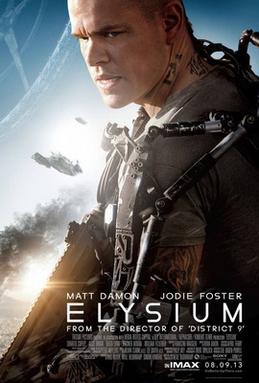
FILM: Elysium


For the unenlightened, Neill Blomkamp is a new film director - a “break-out”, if you will - whose 2009 debut film was a brilliant, innovative and thought-provoking piece of modern cinema. I speak, of course, of District 9, a gritty science fiction film about aliens who come to Earth not as invaders, but as refugees. It was a clever analogical depiction of the state of the disparity and wealth inequality between the first and third worlds, which illustrated the appalling way in which we, in the first world, treat the less advantaged citizens of the Earth.

To be brief, I loved District 9. The unique direction style reminded me somewhat of Cloverfield but with a more conventional approach, with an atmosphere more akin to a documentary than a science-fiction film. This style made the events feel very real and intense, as though the film really was a documentary, and it utilised truly groundbreaking special effects which, when combined with the unique direction techniques of the film, brought the story to life.

Blomkamp certainly has a particular interest in the third world, perhaps influenced by growing up in South Africa. His films are almost an activism campaign for raising awareness about those living in truly horrendous conditions, and our apathetic attitude towards such people. There is a common political theme running through his two films thus far, but he expresses it in a very unique and clever way. For example: District 9 is about aliens who come to Earth as refugees seeking asylum. Blomkamp has taken an issue normally between nations here on Earth (i.e. within humanity itself), and extrapolated it for a much larger scale, making the entire human race subjected to an interstellar equivalent of the same issue. The result is a harsh depiction of what would really happen, applying current trends to this fictional setting. The clever twist is that District 9 evokes sympathy for the aliens by showing the appalling way in which the humans treat the aliens - and by extension of the allegory, it evokes sympathy for real refugees here on Earth. Moreover, the characters which we are meant to feel contempt for are intended to represent us wealthy people in first world countries such as the US and Europe, so it doubles as a guilt trip.

So it’s a thought provoking film, using a science-fiction concept to extend our current behaviour to a cosmic level, providing a unique commentary on a modern issue. Similarly, Elysium takes the same approach to a very similar problem. Set in Los Angeles, Elysium is a very grim depiction of the future, where cities like L.A. are not prosperous or populated with flying cars and shiny architecture. In fact, L.A. has been reduced to a ruin more akin to a rural Middle-Eastern town, full of ghettos and populated by a low socio-economic class of people. The aforesaid flying cars and shiny architecture is on Elysium, a utopian settlement enclosed on a space-station, where the rich managed to buy their way into and have populated it ever since, prosecuting or even killing those from Earth who attempt to enter unauthorised.

Like District 9, it is generally accepted that Elysium is an allegorical tale about refugees, but I like to think it is more broad than that. To me, Elysium seems to be about wealth inequality in general, particularly between the first and third worlds, illustrating it on a much larger scale by putting the first world in space, and the third world together over the entire Earth. And, again like District 9, Elysium evokes sympathy mainly for the disadvantaged people, and the people we are meant to feel contempt for are meant to represent us, in wealthy first world countries.

I mentioned District 9 in such depth because Elysium feels much like District 9 with a much larger budget. The distinct “realistic” filmmaking technique is still present, and it is a rare blockbuster film where the special effects and CGI add something vital to the film. Perhaps it’s because the mockumentary style of filming coupled with CGI makes the CGI feel more real, which is certainly a positive thing. The narrative involves Matt Damon as Max, a blue-collar worker in L.A., who is subjected to the most horrendous workplace health-and-safety regulations, and suffers a fatal dose of radiation as a result of employer negligence and apathy. Given five days to live, he becomes determined to make his way to Elysium and heal himself using the advanced medical equipment they have there.

With its grim and cynical portrayal of the future, the first half hour of Elysium is breathtaking. The visuals are great, the aforementioned filmmaking style is excellent and the setting is compelling. L.A. is run by dehumanising robot law enforcement and legal officials, completely degrading human dignity by forcing people to answer to algorithms, rather than other human beings. What’s truly unsettling is that this is not an unrealistic future for us, as we can already see in 2013 technology heading in a similar direction, and Elysium shows us a potential consequence of our  current technological trends.

The fundamentals are all here. Writing, characters, plot, visuals are all solid and no further comment is necessary, other than to say it’s miles ahead of the mediocre status quo in Hollywood. Everything is executed smoothly and within the realm of plausibility, and is given additional weight by the “realistic” filming technique employed by Blomkamp. What was nice about District 9, though, was the lack of famous movie stars, with unfamiliar faces rendering it difficult to see past the acting and to the actor. Elysium’s cast is fronted by Matt Damon and Jodie Foster, two incredibly well known names, and at times their characters are more easily identifiable by the actors’ names, than the actual names of the characters. The South-African lead from District 9 makes a reappearance, which is nice, because I really liked him as an actor.

Nevertheless, Matt Damon shows in Elysium that he’s far from just a pretty face and actually knows how to act well, bringing life into his character, and I daresay this is probably his finest role yet (that I have seen). Foster, on the other hand, disappointed me. I am a fan of Jodie Foster, who is a tremendous actor and one of my favorite female actors, and she has an extraordinary talent. However, she was crippled from the start by being required to speak in a British/European accent for the role, and she executed it so appallingly it’s all one can notice about her entire screen time. It sounds like she spent her every line putting all the effort into the accent - which fluctuates dramatically anyway - and neglected the core of acting, which is to bring the character to life. The result is every single line delivered in a stale and stifled manner, which hauls you right out of the experience and cripples the film as a whole. I like Foster’s screen presence, and there was great potential for this role to be something incredible, but in a way this nearly ruined the whole film for me. To have one major character acting in a robotic way is almost enough to make the whole experience appear insincere and hollow.

Frankly, this is balanced by her character being killed off relatively quickly, which highlights another missed opportunity. Jodie Foster’s character’s role is established very quickly, as the antagonist, but there’s not enough exploration in to her character at all to justify this. Some back-and-forth dialogue between her and the citizens of Earth would have unfolded the story quite significantly, and would have been fascinating territory to explore. But she dies, not really a great loss for the story progression, and the only thinkable justification for her character is sheer sociopathy.

And of course, with the bigger budget comes the mandatory insipid action sequences, which Elysium devolves to toward the end. There are long, drawn out fight scenes with Matt Damon and the villain, both with super-power suits, and every second is tedious and boring. They have no weight or point to them, and they lack any kind of significance to the plot. The ending is itself fairly generic, as an emotional tale of heroic self-sacrifice which is derivative and uninspired. Most of the action manages to have the necessary tension to make it mean something, but Elysium loses its ability to do this towards the end, and thus loses it’s uniqueness.

District 9 has an important psychological aspect wherein the protagonist - a xenophobic bastard - slowly becomes one of the aliens he was once railing against. It’s a great reversal of perspectives, and was proven very difficult to top with Elysium, which has nothing of the sort; barely an attempt at such a thing. The film is played remarkably straight and safe, with designated heroes and villains, and barely a smudge between the divisions. Not to say it’s completely straight and conventional - far from it. But by the second half, the subversive nature of the film begins to straighten out and Elysium becomes more predictable.

Elysium is far from bad - it may yet be one of the best films of the year. But it seems as though there was so much potential for in-depth development of the concept which was missed. It raised a unique and thought-provoking setting, but failed to go anywhere interesting with it. I was waiting for the culmination of the point of the film which never really happened, with a showdown of ideas between Jodie Foster and Matt Damon juxtaposing the two vastly different viewpoints to highlight their fallacies.

Elysium is a film that could have benefited from being half an hour longer, or perhaps even a full hour longer. It is definitely interesting enough to maintain one’s attention for that long, so it could have gotten away with such a long run time, but in any case, 109 minutes is nowhere near enough time to explore the full scope of what could be done with this concept. It’s a great idea, but it is hardly developed to any significant degree, and ultimately comes across as insincere. Having said that, it’s still a good film, far better than the average film of the day, and it’s definitely a must-see. It’s just not as great as it could have been, and subsequently disappoints. Part of the problem is certainly that Elysium must live in the shadow of District 9, and they’re far too similar to not compare.

Thursday, 15 August 2013

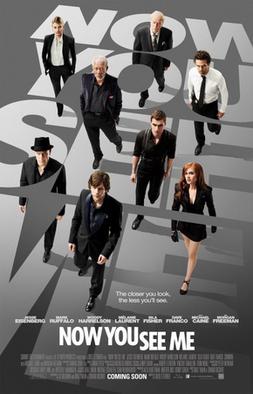
FILM: Now You See Me


Now You See Me is a drama/comedy film by French director Louis Leterrier, and upon announcement was an initially very attractive film for a couple of reasons. The first is that it features a tremendous ensemble cast, including Jesse Eisenberg, Woody Harrelson, Michael Caine and Morgan Freeman, and the second is its original and unique story idea. The film concerns a group of four magicians of various styles banding together to use their illusionary tricks on a large scale, usually to commit robbery. It is an intriguing premise, and since seeing the trailer I’ve been very interested in the final result.

The film follows four professional magicians - a slight-of-hand artist, a mentalist, an escapist, and a street magician - who are called together by an anonymous benefactor for mysterious reasons. A year later, they are shown performing a collaborative theater-style magic act in a stadium setting, whereupon they proceed to rob a French bank from the stage in Las Vegas. From there, the film follows an FBI agent and his assistant in their efforts to find and catch these magicians and hold them accountable for their crimes - which, given the nature of illusionism, one can imagine would be problematic. The concept is very entertaining for the aforementioned reasons. Watching a high-strung FBI agent chasing clever and subversive illusionists to no avail is a very gratifying and amusing experience.

Now You See Me places enough emphasis on humour to be labelled at least partially comedy, in my opinion, and is also actually genuinely funny in that regard. There are also enough sincere moments for it to be labelled either an action or a drama; regardless, the film is both humorous and sincere and, above all, convincing for the most part. Now You See Me has a unique overarching premise and plot, but is distinctly a character focussed film, with the primary focus being the various characters and interactions between them. Each character is well written and well defined enough to be both likable and flawed, and as a result, all characters feel plausible and alive, which gives true weight to the story. Generally, it’s a difficult thing to do with so many different characters, but Now You See Me manages to pull it off remarkably, giving each individual enough screen time to establish exactly who they are, but without clogging the script with excessive backstory.

There is a technique oft used in screenwriting, which I believe is generally successful in good characterisation, and that is the use of inconsequential, banal banter between characters. The incidental quips between various individuals in the film, excluding expositional dialogue, give glimpses into the person’s true self, and their personality begins to unravel. Often it seems these minor quips are used primarily for comic relief, but with due consideration to who says what, to whom, when, and in what context, it can be used to breathe life into the characters in a remarkably profound way. This is true because it resembles the kind of banal banter real people engage in in real life conversations, and it’s something human audiences can relate to. We begin to see how the characters on screen are similar and dissimilar to ourselves, and others we know, and it gives us an accurate frame of reference when we try to understand who these people are. Films with more comedic leanings often accomplish this to a greater extent than more serious films, as their entire aim is to score laughs, and with these kinds of humorous one-liners they show us more about the true personality of these characters, inadvertently or otherwise. It’s something Now You See Me does quite well, managing to be simultaneously funny and real, and this is bolstered by the aforementioned all-star cast, with a line up of either great or at least decent actors.

Indeed, sometimes all it takes for a film to be enjoyable is to have good actors we enjoy watching perform at their best, and that could be enough for this film. But unfortunately, it is not entirely the case.

Where Now You See Me falls down drastically is in plot development, particularly in the latter half. Over time, it is revealed that the elaborate schemes and tricks preformed by the quartet (who are known as the “Four Horsemen”) are a series of tests and trials so the four can “prove their worth” and join a secret society of magicians (cf. Illuminati). It turns out their work was little more than elaborate instructions which they had to follow to the letter for this entire scheme to work. As a plot point, it merely serves to undermine the implied genius of each character, as they were just following orders the entire time, and the very existence of a secret society of magicians to me seems silly. Additionally, everything is over-exaggerated to the point of absurdity, which doesn’t do any favours for the plausibility of the events; things glowing blue when “magic” is acted on them, over-elaborate stage props, stifled and cringeworthy speeches from the Four Horsemen etc. These elements do little more than make the entire experience seem surreal and strange, and it somewhat undermines the idea that these “magic tricks” are mere illusions of magic, if everything is glowing with an eerie blue supernatural luminescence. My point is that the visual style reeks of style over substance, with the excessive reliance on CGI making everything seem far too much like surreal science fiction or fantasy, and there’s almost no subtlety in the film whatsoever. A more subtle exploration of the dynamics of the magic tricks, with more organic visual effects, would have been more effective.

Despite the needlessly elaborate plot, Now You See Me is still decent, and has great strengths in other areas. Part of the central concept is the idea that all the magic tricks shown are merely  exercises in deception - this is explicitly stated many times by the characters. What’s remarkable is how it manages to fool us, the audience, with many of the tricks apparently supernatural, and left unexplained until a recount of the events later on, almost as though the film is playing a theoretical trick on its audience. It’s a neat touch how there is a logical explanation for everything. The genius of the film comes out in the illustration of the aforementioned concept concerning deception and red herrings to fool audiences, as part of the overall mystery is regarding who brought these four magicians together in the first place. The film deliberately draws your attention to several suspects - Michael Caine, Morgan Freeman, and even the FBI agent’s assistant, played by Mélanie Laurent. These are successful distractions from the truth, when it is revealed to be the FBI agent himself who is the puppeteer. In discussing the dynamic of illusionism, the film illustrates itself how these kinds of psychological tricks are played on audiences, on a vastly different level. It involves a small amount of fourth-wall leaning to get there, but it’s a great touch.

Perhaps calling it “genius” is too generous, but Now You See Me is certainly a clever film. Despite the various plot issues, it has a solid script to fall back on, which is more than I can say for most recent releases,  and is genuinely funny. And if that’s not enough, there are at least some great actors who are entertaining to watch - incidentally, Michael Caine makes a great villainous character. But that aside, overall Now You See Me is little more than a slightly above-average comedic drama. As a character focussed film, it’s well written with nicely rounded characters, but it hardly stands out in any regard, and dependence on CGI once again rears its ugly head to the detriment of yet another film. It’s a fascinating and entertaining experience, and a film I enjoyed a lot, but it's unexceptional.

Thursday, 1 August 2013

MUSIC: Asymmetry - Karnivool


A while ago, I was really into progressive rock as a genre and musical style. I enjoyed the subversive complexity and elaborate motifs which kept the music interesting, engaging and unpredictable. It didn’t take long for me to tire of it, though, because the more I listened to progressive music, the more I realised it had become a conventional sound in and of itself, and so-called “prog” bands were merely writing incredibly long and elaborate songs for their own sake, at the expense of the music. It became progression for progression’s sake. The convention is to create music with irregular time signatures, absurd song lengths which constantly shift and change tone, and supposedly push the boundaries of what has been done before. The problem, however, is that these “prog” bands write songs for the sole purpose of being complicated and elaborate, and the music suffers for it. Regardless of your perspective on musicality, we’re talking about aural aesthetics, and bands which try to write the most elaborate, complex, and unconventional songs without giving thought to the actual sound of the music are no longer writing music, instead merely showing off how clever they are. I like complexity, but much of the “prog” rock scene is little more than pretentious bands showing off how amazingly clever they are, while giving no thought to the aural aesthetics of what they create. Technically impressive, but musically lacking. 

Essentially, that is the crux of my issue with progressive rock. As a counter-example, I’d like to cite Tool as a band who does so-called progressive music well. Despite their very complex songwriting techniques, anyone can tell that for them, the music comes first, because the music fits together in a way which sounds natural, organic and balanced, and the songs evolve and shift the same motifs to create a sense of unity and consistency within one song, rather than sounding like several different songs stitched together. Even Schism - with it’s 40-odd time signature changes - flows naturally from one segment to the next, rendering the odd timings barely noticeable. It feels like we’re at the other end of the spectrum with Karnivool, with their latest album Asymmetry sounding very disjointed and inconsistent at times.

Karnivool are an alternative-metal-progressive-rock band hailing from Perth, Australia. They are fronted by Ian Kenny, also the lead singer of Birds of Tokyo, a band who released two good albums before disappearing into mediocrity. Karnivool’s last album, Sound Awake, was an interesting and eerily atmospheric rock album with progressive and heavy metal influences. It’s a good album, full of original ideas synthesized well, and carrying a unique, thick, bass-heavy sound. Asymmetry, while still consisting of a lot of interesting and decent musical ideas, feels very inconsistent and as though the band struggled with putting their ideas together in a coherent fashion. In traditional “prog rock” fashion, the songs lack a predictable structure, and while this is not necessarily a bad thing, in this particular instance it is the cause of the album’s inconsistent feel. Songs tonally and rhythmically jump all over the place, and each sounds like it could make two or three good songs out of it.

It seems like Karnivool are trying to do too much, and in trying too hard to be complex they ended up doing so at the expense of the music, producing an album more convoluted than complex. There’s not a whole lot of breathing room for the music to really breathe, grow, develop, and manifest itself, as the band try to cram as much as they can into each song. Just as you start to get into a song, it changes into something drastically different, and the contrast is more jarring than intriguing. It would be better if the songs changed more subtly, while retaining a consistent tone and motif, rather than abruptly change into a completely different song two minutes in. It would even work better if the songs were longer, allowing each section of each song to develop some momentum before switching. The result, however, is difficult to keep track of, and gets ahead of itself too often that it becomes difficult to listen to.

In the interest of complexity and innovation, Asymmetry includes a lot of polyrhythms and switching to and from unconventional time signatures. This sounds good in theory, and when done well it can be incredible, but it falls flat in Asymmetry because such syncopated rhythms sound very unnatural, stifled and inorganic. I can’t put my finger on exactly why it is, but in songs like We Are (which switches between 7/8 and 5/8 per bar at the start) the way the rhythmic irregularities grate together stand out very conspicuously, and it becomes borderline irritating to listen to. A.M.War is in 11/8, and unless you can figure that out, the song is little more than an annoying sound.

Having said that, it is very satisfying to decipher the time signatures, and Asymmetry becomes more enjoyable to listen to once you do. But remember that all this is at the expense of musicality. If the music is annoying to listen to because you’re trying to figure out the rhythms, we’re no longer listening to, or feeling, the music, because we’re trying too hard to analyse the arithmetic of the song, and in doing so we overlook the most important aspect of music: aural aesthetics. It might be technically brilliant, but if it’s musically average there was no point bothering with the complex techniques in the first place. Techniques are a means to an end when it comes to writing music, and not an end in itself. The syncopated rhythms and polyrhythms, the unpredictable song structures and long, evolving songs are techniques to be used as tools to assist in making great music, and should never be used for their own sake. This is the exact same reason I refuse to be impressed by guitar solos, unless they contribute constructively to the tone of the music. Because if you’re only using guitar solos or unconventional time signatures just for the sake of it, you’ve ceased writing music, and at that stage you’re merely showing off.

When Asymmetry abandons its pretentiousness, the resulting music is actually fairly unexciting. Eidolon is all that needs to be heard for this point to be made. It’s little more than a bland, boring, simple pop-rock song, uninspired and uninspiring. Despite this, I enjoyed Asymmetry mildly. Even if the music is lacking, there are enough good ideas to keep one interested for a while, and the songs are impressively composed. It’s a hollow effort, though, unless it contributes to the actual music, and this is something Karnivool seemed to struggle with. It is as I mentioned earlier: technically impressive, but musically lacking. And this is why progressive rock earns the pretentious label, because it often puts the compositional techniques higher than the actual music.

I think Asymmetry’s main issue was having to live in the shadow of Sound Awake, which was quite excellent. There is one more issue which must be raised, incidentally relevant to both albums, which is that both are far too clean. Ian Kenny’s voice is very clean and refined, and the guitars and bass are smooth and polished, which I personally find off-putting and insincere, as the finished product feels filtered through studio production, resulting in a diluted sound. The Refusal shows them taking cues from the metalcore scene, complete with screaming and everything, but this sounds more like an attempt to cash in on the popularity of metalcore than legitimately expanding into other directions. But this is a minor issue which can be overlooked. Overall, Asymmetry is fairly enjoyable.

There was a lot of potential on this album. Simplicity in music is far overvalued in modern music, and Asymmetry is definitely miles ahead of the garbage that passes for music these days. But I feel Karnivool tried to do too much, and the result subsequently collapsed under its own weight. What’s worse, is that everything they tried to do has already been done better - both by themselves previously, and by other bands. There are a lot of really interesting things going on here, but they aren’t implemented effectively enough for them to manifest into well-rounded songs, and the album sounds like all the good ideas where shaken up in a box and delivered as the final product. I like Karnivool as a band, but this album is a disappointment. I have to concede it’s still fairly good, and worth a listen, but it’s far from amazing and has a lot of issues.