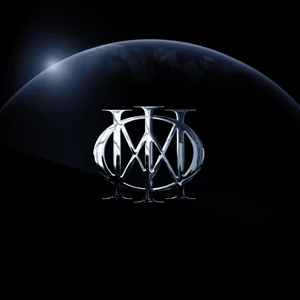
If you’ve ever been involved in what is currently termed “progressive” music, and specifically progressive metal, you have almost undoubtedly heard of Dream Theater. Often hailed as one of the greatest progressive bands of all time, Dream Theater are known (by me) for their unique sound and complex songwriting structures, as well as all being brilliant individual musicians in their own rights. They emerged out of the glam rock and classic heavy metal scenes of the 1980s, and to me they seem to be more of a glam-metal revival band, but with their dark and complex musical style they have managed to breathe life into a genre which has been lifeless and superficial for decades.
I felt compelled to review Dream Theater’s new self-titled album after listening to my music on random and finding a few old Dream Theater songs come up, as I felt a bit of nostalgia for a band I was once a fan of. I’d forgotten how good they actually are - yes, their lyrics are terrible, their songs are hit-and-miss, they illustrate perfectly the reasons for my distaste for guitar solos - but their overall sound is so unique that you have to give them credit. As a straight metal band they are miles ahead of most, with both a heavy powerful sound combined with unpredictable and subversive songwriting techniques making them one of the most interesting bands to listen to today. As well as this, each member is a fantastic individual musician in his own right and each has their own unique sound the bring to the table. What made Dream Theater really great, in my eyes, is a very powerful and resonance in the music, due in part to a combination of James LaBrie’s incredible singing voice and Mike Portnoy’s drumming prowess. They are a band I thoroughly enjoy listening to, and have a lot of fun in doing so.
The most striking feature of this new self-titled album is how clean it sounds. Everything is produced such that it is polished to a mirror-shine, particularly the drums. One noticeable feature of Mike Portnoy’s work on their previous albums is his unique drum sound, which was crisp, sharp and strong. It contributed to the overall Dream Theater character, and is conspicuously absent from this release. I haven’t kept up to date with the band for the past few years, so I’m not sure if this change in tone happened before or after Mike Mangini’s induction, but to me it seems the band is poorer for Portnoy’s departure. The drums sound clean, flat, smooth, and thus devoid of character, particularly the snare, and prominently more subdued because of it - the snare sounds very artificial as well as soft, like traditional 80s heavy metal would sound, and I don’t like it at all. It’s far less affecting than it could be.
In fact, a big part of this album is the inorganic over-production of the sound, something which I believe filters out the humanity and the spirit from the music, making it sound mechanical and meaningless. This is something I have commented on before, and here is yet another example of it - and because of this feature, the whole album feels restrained and reserved. It sounds as though the band is not putting the same passion and power into their music as they once did; as though they’re holding back to make it more palatable. Jon Petrucci’s guitar - particularly during choruses - is (paradoxically) remarkably unremarkable, as well as generic and uninteresting. The ridiculous level of polish applied to this album blends everything together into a bland mush of mediocrity, and the guitarwork is no exception. It’s disappointing because it subtracts the “heavy” from “heavy metal”, as there is no weight to the guitar distortion, and as a result it sounds superficial. Petrucci’s guitar tone once had a crisp, sharp sound which matched Portnoy’s - both of which combined to give the band a unique character - and for the most part is nowhere to be heard. Even James LaBrie’s vocals appear restrained, held back, and moderated - this is a man who has a tremendously powerful singing voice, and is a demonstrably incredible singer, holding back his voice, and the music suffers for it. Many times in Dream Theater’s back-catalogue I have noticed LaBrie carrying much of the power and drive in their music, but here he sounds far too tame. As for Jordan Rudess’s keyboards, I can’t say I’ve ever been a fan of his contribution to the band, so perhaps no further comment is necessary on this front.
Much of the songwriting decisions are equally questionable to the production choice. I’ve mentioned before my distain for overly clean melodies and progressions, where the resulting music feels too friendly and unchallenging with no real tension or dissonance involved, and it appears I have to mention it yet again here. This phenomenon is particularly prominent in the atrocious choruses to be found in this album, and the best examples would have to be from The Looking Glass and Surrender To Reason, among others. The relentlessly saccharine and superficially happy tone coming from the choruses makes me cringe. It could possibly be attributable to the songs’ chord progressions being based on the major scale, the pentatonic scale, or the major pentatonic scale - although I may be wrong about that, but the effect is the same in any case. Regardless, the lead melodies are certainly based on the pentatonic scale, and the result is music which fails to engage the listener. I can feel it trying hard to please me, what with the complex rhythms and structures, but its efforts bounce off my ears warranting hardly a blink. There are many guitar progressions which are so random and meaningless that they might as well be so much white noise, one example being most of Enigma Machine. There’s no weight to what the instruments are saying, no anchor to anything tangible; they just float off doing their own thing, much like a helium balloon just out of reach, and it happens to be outdoors. There’s no clear sense of direction on this album.
I can’t leave this subject without mentioning guitar solos. One of the great guitar artists in all of music history is incidentally one from whom the metal scene could - and should - learn a lot from, and never seem to, and this is David Gilmour of Pink Floyd. As a guitar soloist, he knew exactly where each note needed to be for the song to work; he would put so much weight and depth into a single note that he needn’t use many of them, the result being some truly astounding, eerie and atmospheric masterpieces. This made him a far, far greater guitarist than the shredders of the heavy metal scene like Kirk Hammett or, indeed, Jon Petrucci. It’s evidently a quality/quantity issue, and while Petrucci has made some commendable solos on songs such as Misunderstood and As I Am (to name a few), I can’t hear a single instance on this album.
Dream Theater also has a strong string orchestra focus, making much of it sound like a mediocre film score. None of the progressions seem to go anywhere - again, the orchestra flails around without any clear sense of direction. There’s a long orchestral interlude in the middle of Illumination Theory, which is about as derivative as one could get. For the style employed, it’s very generic and uninteresting to listen to, and not very compelling - the strings don’t enhance the rest of the music; they’re just there for their own sake. In fact, at times the music sounds more like Evanescence than Dream Theater, because of the combination of distorted guitar and string quartet.
The album does have its moments, however. The Enemy Within has a strong main guitar riff, incorporating fifth chords on repetition, creating a nice variety whilst remaining consistent, although the song is subsequently ruined by the chorus. Illumination Theory has just as many decent ideas as it does have boring ideas, including a great bassline at one point (followed by an utterly insipid and overlong guitar solo). But it’s not enough - most of this album is boring drivel with no weight or impact to it at all. For “progressive” music it is curiously radio-friendly. I personally don’t believe “progressive” is a genre of music, regardless of whether it is metal or rock or folk - it’s an idea, a concept, or a philosophy of music writing, where one strives to push the boundaries and experiment with new ideas. Dream Theater shows few signs of this on their new record, rather, they are simply reiterating what they’ve already done. There’s nothing on this album that the band has not done before, and done better - and regardless, I’d hesitate to call it progressive, anyway.
Possibly the greatest pitfall of progressive music (or one of them at least) can be tested with a simple question: ask yourself if this section of the song could at least as easily be its own song. Progressive bands have a tendency to pretend they are clever by stitching several different, unrelated musical ideas together to create one song - the problem of this, of course, is that they might as well be individual songs, so what’s the point of calling them one song? I believe it is dishonest to do so. If you are going to write long songs, each section should build on what’s come before, or be a variation on the song so far, and certainly not be completely different. I’ve said it before, but Tool is a perfect example of this, and Dream Theater themselves have managed to do this from time to time. On this album, however, they don’t do it enough to warrant commendation.
All of this illustrates that Dream Theater has been filtered to the point that it is no longer recognizable as a Dream Theater album; much of this could easily be mistaken for any other “progressive metal” band. Dream Theater is a fun band I listen to on occasion, but this album is not very fun because there’s very little substance to it. They are a far from perfect band, and while I wouldn’t even call this album “bad”, it is mediocre and forgettable.

