Finally, some music worth talking about.
It’s not as though there’s been any particularly bad music that I can insult for catharsis, either, like what I did for Bring Me The Horizon. And there’s no point reviewing another metalcore album, because I could simply recycle my Sempiternal review and it would be no different. And since Tool has been spending all their time re-writing the calendar, instead of finishing their new album, there hasn’t been much in the way of interesting music released for some time now. (If anyone happens to be reading this, rather than doing something productive with their lives, feel free to lend some music suggestions).
When I was very young, I used to listen to pop music - this was, of course, the trend of the late 1990s. And as I have long since repudiated pop music in most of its forms, I have been pleasantly surprised in discovering Lana Del Rey’s chillingly powerful previous album Born To Die. It was very forceful, melancholy, and dark; with its dissonant orchestral backing, strong, near-industrial drums, and her astonishingly versatile and powerful voice. Despite its polished exterior, Born To Die was raw, honest, and well-crafted.
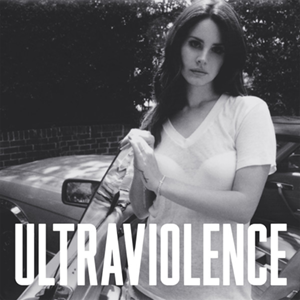
Three years later, Lana Del Rey has released a new hit album - notably, stylistically divergent from her previous album. It is much more stripped back, with a very organic, raw, and unpolished sound, sounding vaguely similar to Jeff Buckley’s good songs with a touch of blues. Rather than complexity, there’s subtlety; every instrument is used sparingly for maximum effect, perhaps illustrated best in the opening track Cruel World. One could almost say that it the album sounds flat, and if you weren’t really paying attention, much of the subtleties - and therefore much of the substance - could be overlooked. Unlike half of Born To Die, there’s not much “party music” on Ultraviolence.
It’s that nonchalant melancholy that was so effective on Born To Die’s opening and title track which Lana Del Rey has explored further on this album. Ultraviolence doesn’t have the same catharsis as the powerful Lolita, or the brilliantly subversive Off To The Races - but it does have an ethereal and eerie melancholy, while Del Rey carries a certain “jaded” exterior projection. Rather than try to steal the spotlight, she steps back and “merges” with her music, allowing all layers of the music space to flourish, which creates a far more powerful overall effort than if it were just “singer + backing”.
It’s rare for the standout song on an album to also be the lead single, because the lead single is usually the most lukewarm and palatable track in order to sell the album to the lowest common denominator. Yet West Coast has a hint of the force seen on Born To Die with a very subtle dissonance carried in the guitar, and some interesting layering which builds the atmosphere over time. The background noise is less orchestral on this album, which contributes to its more stripped-back ethereal quality, yet still manages to build a thick atmosphere - this can be heard on other songs such as Sad Girl and Black Beauty, as well as many others. And all throughout, the subtle use of clean guitar in the background acts as an anchor to reality, keeping the music firmly grounded whenever it is in danger of sounding artificial.
Lyrically, Lana Del Rey has always been one for contradiction. In many songs from her previous album, she could go from extreme love to extreme hatred in one sentence without batting an eyelid. It is that kind of cognitive dissonance representing the complexity of human existence and emotion, which can only be expressed in verse, and she executes it quite brilliantly. This is most prevalent on Ultraviolence’s title track - and it has been suggested that the song “glorifies domestic violence”. It does nothing of the sort; rather, it takes the perspective of the victim and paints the complex emotions at work, thereby explaining why it is such a contentious issue. While I’m not sure if Lana has actually experienced this before (although it’s not unthinkable), I daresay this song does more for victims than her critics have.
Another contradiction at work is that the song Fucked My Way To The Top is probably the most accessible song on the album, and should have been the lead single on the album. It wouldn’t have made it; perhaps because of the explicit lyrics, and maybe because the subject matter might have hit a bit close to home for the pop-music industry. But it is the juxtaposition between light and dark, love and hatred, happy and sad, clean and gritty, which really showcases what makes Lana Del Rey’s music good.
What I’m uncertain about is the literary references. Born To Die featured numerous references to Vladimir Nabokov’s Lolita, which makes a lot of sense in context; yet Ultraviolence’s reference to Anthony Burgess’s A Clockwork Orange is perhaps more obscure, and less easily deciphered. Although, it must be said, much of this album has that old-fashioned eerie quality which would have fit in Stanley Kubrick’s films quite nicely.
The major selling point of Lana Del Rey’s music is that it is, above all, genuine. Honesty is the secret ingredient in all music; Lana Del Rey puts her mind and heart to her art, and the result is very powerful. Ultraviolence doesn’t showcase Lana’s incredible vocal range and singing versatility to the same extent as noticeable in previous songs such as Off To The Races, Lolita, and, quite frankly, most of that album. She has restrained her voice somewhat, but it hasn’t been too detrimental to the quality of this album - and, realistically, her previous style would probably become a gimmick if she continued with it. But she shows her talent by releasing a repertoire of slow, atmospheric and emotional songs in Ultraviolence. It is likely this album would have been overlooked were it not for the success of Born To Die - but, as it stands, Lana Del Rey shows us all that there is still hope yet for the mainstream music scene of the twenty-first century.

No comments:
Post a Comment